Audi A3
Audi A3: review and buying guide
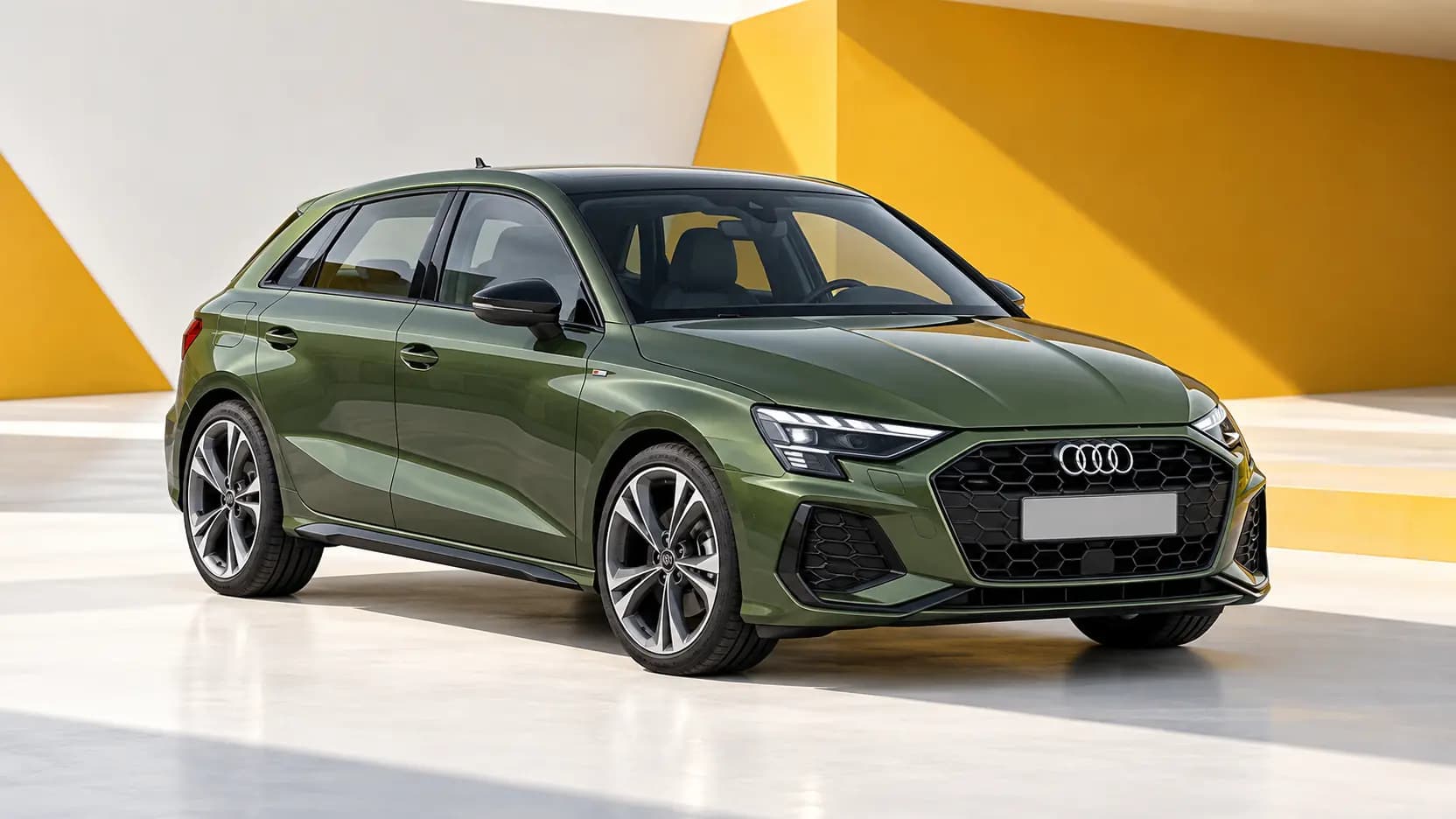
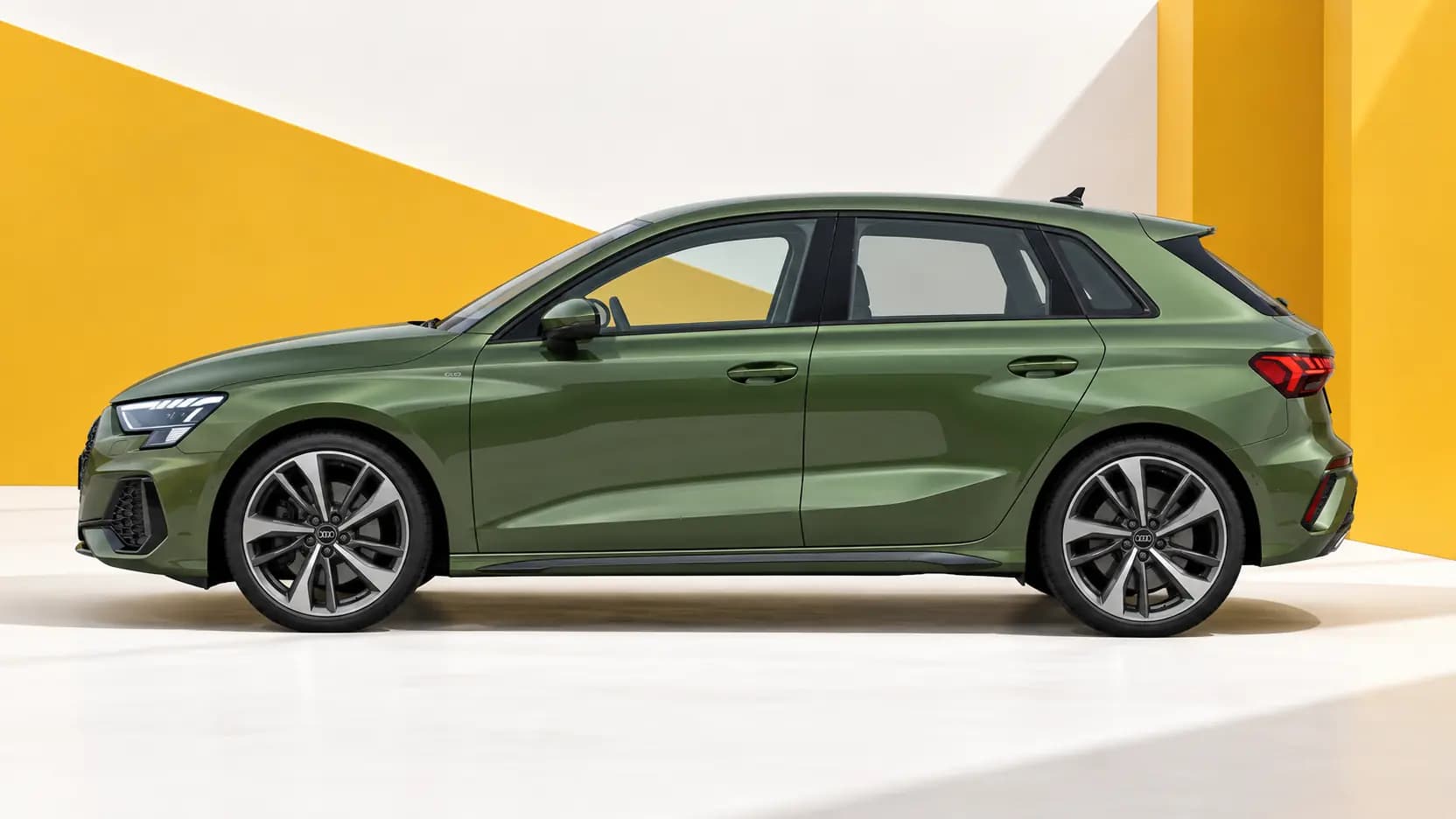
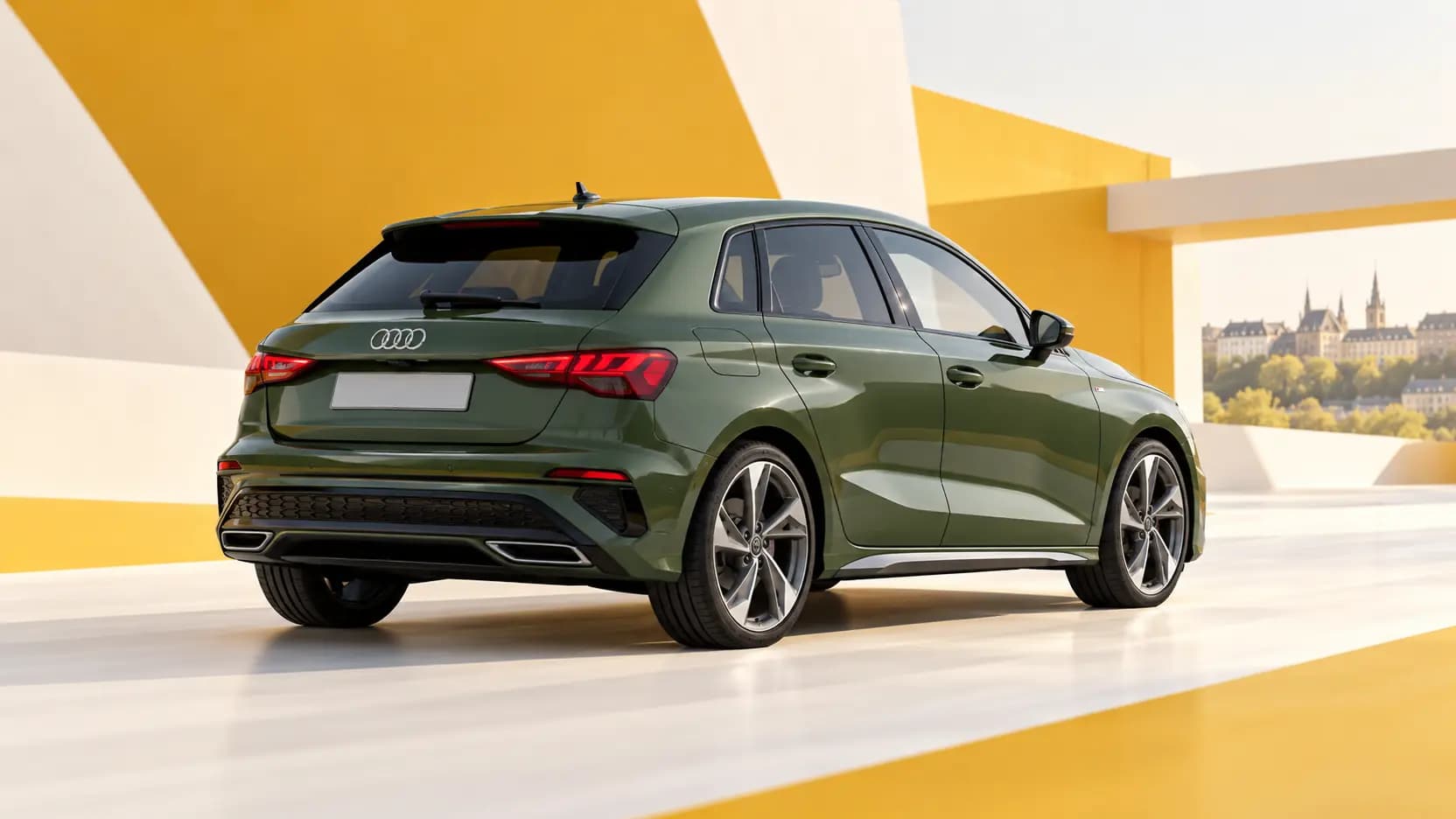
The Audi A3 is a premium compact car whose 8Y generation combines familiar TFSI and TDI engines with a genuinely useful long-range TFSI e. This guide keeps the 8Y separate from 8V, 8P and 8L cars so their space, technology and checks are not confused.
| Segment | Premium compact car |
|---|---|
| Body styles | Five-door Sportback, four-door Sedan; allstreet derivative |
| Production | 1996-present, 4 generations |
| Generations on the Luxembourg used market | 8Y (2020-present), 8V (2012-2020), 8P (2003-2013), 8L (1996-2003) |
| Powertrains | Petrol, diesel, mild hybrid, plug-in hybrid |
| Boot capacity | 280-425 litres |
| Euro NCAP | 5 stars (8Y, reassessed 2025) |
| listings on Luxauto | 296 |
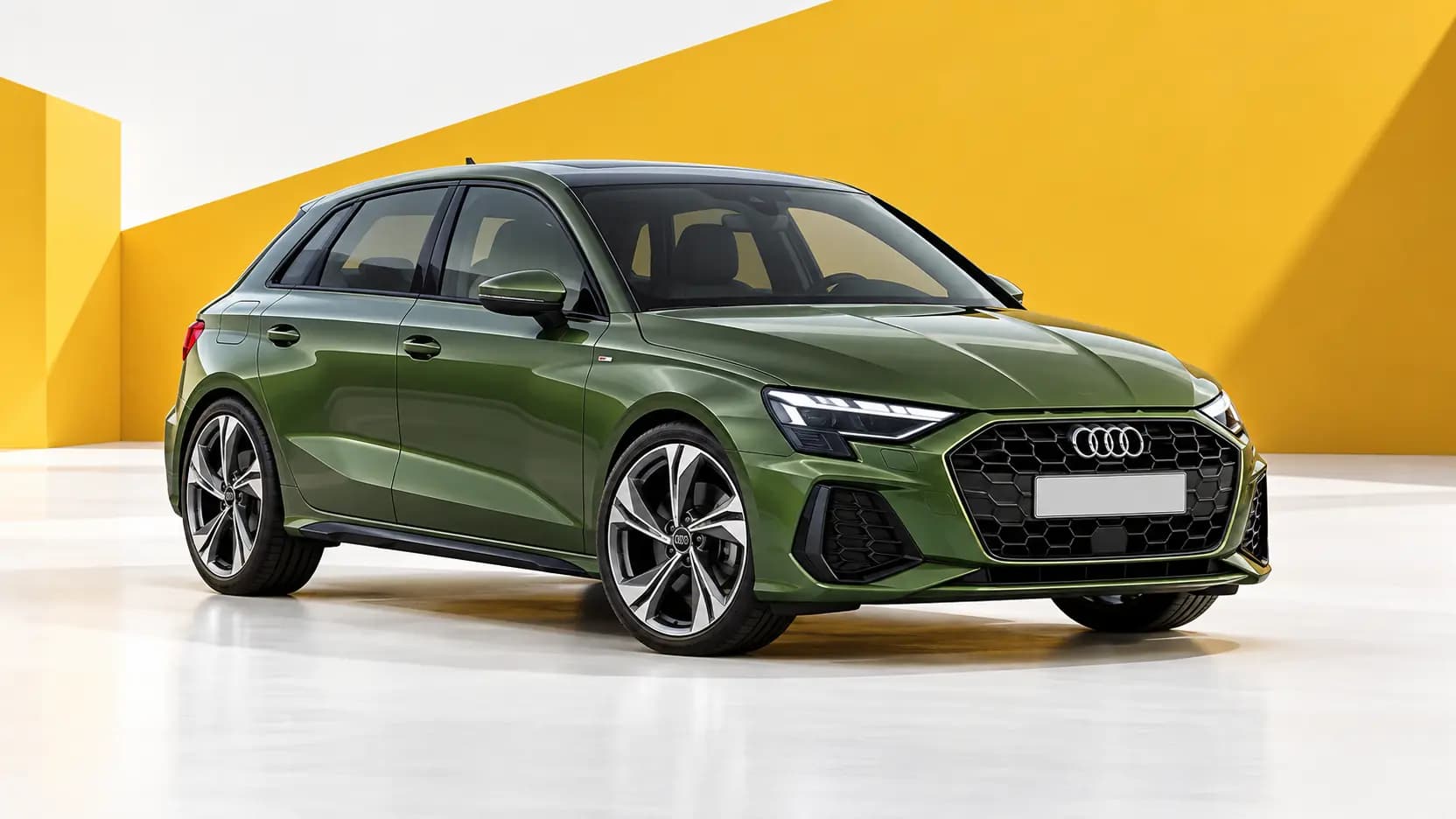
What are the pros and cons of the Audi A3?
The A3 packages Audi finish and motorway refinement into a compact footprint; its compromises are rear space, option-dependent equipment and reduced TFSI e luggage capacity.
Strengths
- The reassessed 8Y earned five Euro NCAP stars in 2025, including the 35 TFSI, 35 TDI and 40 TFSI e variants listed by Euro NCAP.
- A combustion Sportback provides 380 litres with the rear seats up, while the Sedan reaches 425 litres.
- The updated 40 TFSI e combines 150 kW system output with up to 143 km of official electric range.
Weaknesses
- The TFSI e battery reduces Sportback luggage capacity from 380 to 280 litres.
- Rear legroom and door access are tighter than in an Octavia, especially with tall occupants in front.
- Many desirable 8Y features were option-dependent, so two visually similar cars can differ materially in lighting and assistance equipment.
Good to know before buying
- Check the digital service record and verify whether oil servicing followed the car’s actual regime, not only the long-life maximum.
- On S tronic cars, test low-speed take-up from cold and ask for gearbox-service evidence where the schedule specifies it.
- Pair a phone, operate both displays and test every parking sensor, camera and driver-assistance warning before purchase.
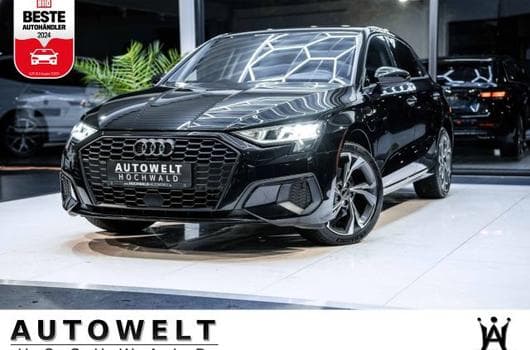
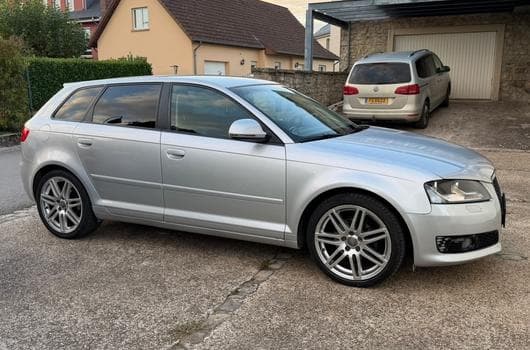
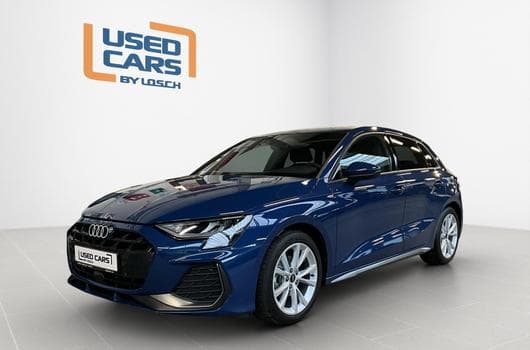
Current Audi A3 listings in Luxembourg
View all Audi A3 listings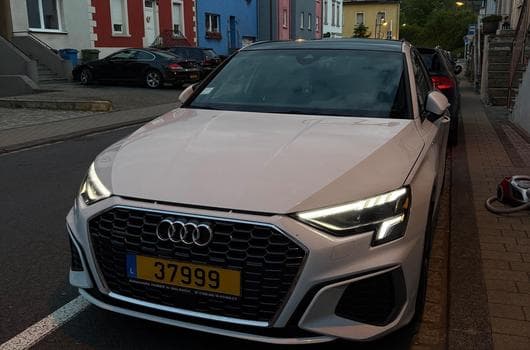
3

6
15
3
15
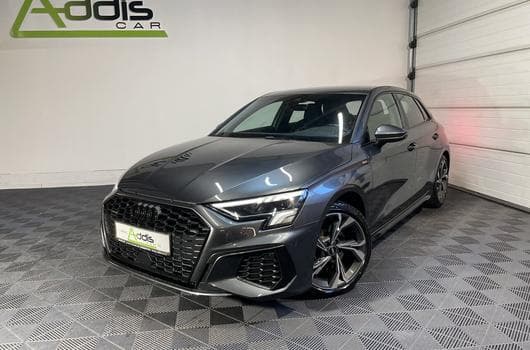
15
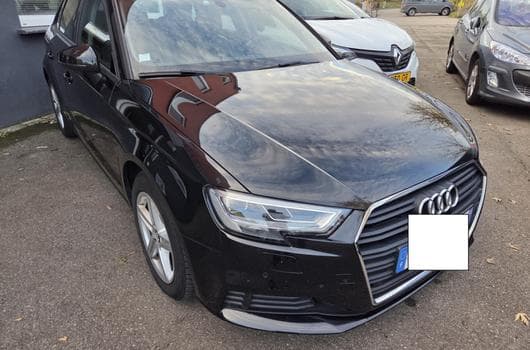
15
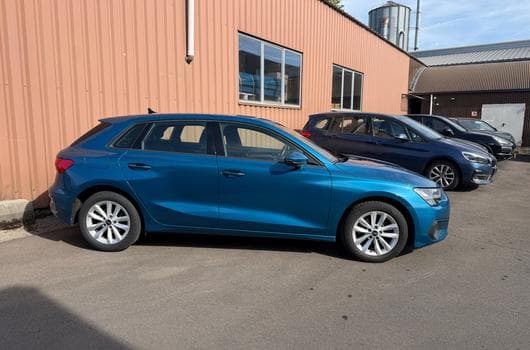
5
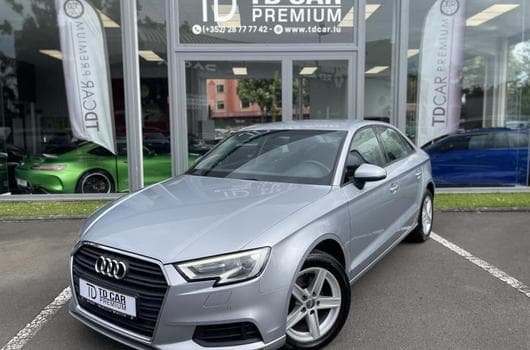
15
15
15
15
What are the Audi A3 generations?
The 8Y is the current A3; the 8V is the abundant value generation, while 8P and 8L cars need age-led condition checks rather than specification comparisons.
| Generation | Code | Years | Key change vs previous | Listings |
|---|---|---|---|---|
| 4th generation | 8Y | 2020-present | Digital cockpit, stronger assistance systems, 2024 facelift and long-range TFSI e | View 8Y listings |
| 3rd generation | 8V | 2012-2020 | MQB platform, lighter body and first A3 Sportback e-tron PHEV | View 8V listings |
| 2nd generation | 8P | 2003-2013 | Sportback and Cabriolet joined the range; direct-injection TFSI and TDI expanded | View 8P listings |
| 1st generation | 8L | 1996-2003 | Established Audi in the premium compact class with Golf IV underpinnings | View 8L listings |
The 8Y is the best fit for modern assistance and the latest TFSI e, but equipment must be checked car by car. A late 8V has simpler controls and broad engine choice. The older 8P and 8L make most sense only with excellent history, body condition and evidence of timely belt or chain work for the exact engine.
Which Audi A3 engine should you choose?
The 35 TFSI is the balanced choice for mixed use; choose the 35 TDI for regular long-distance mileage and the 40 TFSI e only with reliable charging.
| Engine types available | Petrol, diesel, mild hybrid, plug-in hybrid |
|---|---|
| Engine families | EA211 evo2 TFSI, EA288 evo TDI; electric motor on TFSI e |
| Power range | 116-333 hp (85-245 kW) |
| Transmission / drivetrain | 6-speed manual or 6/7-speed S tronic; front-wheel drive or quattro |
| 0-100 km/h | 4.7-10.1 seconds |
| Combined consumption | 4.4-8.7 l/100 km; 0.1-0.4 l/100 km weighted for TFSI e (WLTP) |
| CO2 emissions | 117-198 g/km; 2-9 g/km weighted for TFSI e |
| Boot volume | 380 / 1,200 litres; 280 / 1,100 litres on Sportback TFSI e |
| Towing capacity | Up to 1,800 kg braked, variant-dependent |
| Length / Width / Height | 4,352 / 1,816 / 1,441 mm (8Y Sportback, equipment-dependent) |
| Wheelbase | 2,630 mm |
The 35 TFSI offers enough performance for daily Luxembourg traffic without the tyre, brake and insurance costs of an S3. The 35 TDI suits frequent motorway work. The 40 TFSI e can cover long commutes electrically on paper, but its 280-litre boot and charging routine must fit the buyer.
What are common Audi A3 problems?
No single defect applies to every A3. Recall coverage is VIN-specific, and the most useful reliability check is a cold test drive supported by a complete digital and invoice history.
- Rear-centre head restraint — Selected 8V A3 vehicles from the 2018 model year, 2018. Campaign R/2019/066 covered a head restraint that might not meet specification. Confirm replacement or inspection by VIN. Documented recall record — Audi A3
- Rear-seat backrest frame — A small VIN-specific batch of 2018 A3 vehicles, 2018. Campaign R/2018/338 addressed an incorrectly welded head-restraint mounting. Check that the rear backrest was inspected and replaced where required. Documented recall record — Audi A3
What to check before buying
- Use the VIN with an Audi retailer to confirm every outstanding recall or service campaign.
- Start the engine cold, watch for warning lights and test smooth S tronic engagement in both directions.
- Inspect water channels, boot floor and spare-wheel well for damp, especially on cars with a panoramic roof.
- Check even tyre wear, brake condition, MMI functions, adaptive lighting and every assistance sensor.
What does an Audi A3 cost to run in Luxembourg?
Running costs for an Audi A3 in Luxembourg depend on homologated CO2, tyres, brakes and equipment. The figures below are estimates, not invoice amounts.
Taxe sur les véhicules automoteurs (annual road tax)
| A3 35 TFSI (approx. 129 g/km petrol) | approx. €70 per year (estimate) |
|---|---|
| A3 35 TDI (approx. 128 g/km diesel) | approx. €104 per year (estimate) |
| A3 40 TFSI e (approx. 8 g/km weighted) | approx. €30 per year (estimate) |
| S3 (approx. 190 g/km petrol) | approx. €171 per year (estimate) |
Basis: official formula tax = CO2 × b × c, with b = 0.9 for diesel or 0.6 otherwise, c = 0.5 up to 90 g/km and +0.1 per additional 10 g/km, and a €30 annual minimum. Rounded estimates use representative homologated values; the registration certificate determines the invoice.
Servicing
Basis: Audi technical data and vehicle-specific maintenance information; the individual display and plan take precedence.
Real-world consumption
Basis: qualified mixed-use estimates, kept separate from WLTP homologation figures.
What are the best alternatives to the Audi A3?
These four alternatives cover the Audi A3's main use cases but differ in space, controls, comfort or powertrain strategy.
| Model | Body | Powertrains | Boot (l) | Euro NCAP | Key difference |
|---|---|---|---|---|---|
| Audi A3 | Five-door Sportback, four-door Sedan; allstreet derivative | Petrol, diesel, mild hybrid, plug-in hybrid | 280-425 | 5 (2025) | |
| Volkswagen Golf | Hatchback / estate | Petrol, diesel, mild hybrid, PHEV | 273-611 | 5 (2019) | More cabin and boot choice for less money; the Audi has a more premium finish. |
| BMW 1 Series | Five-door hatchback | Petrol, diesel, mild hybrid | 300-380 | 5 (2019) | Sharper steering and a different control layout; the A3 offers a broader PHEV choice. |
| Skoda Octavia | Hatchback / estate | Petrol, diesel, mild hybrid, PHEV | 450-640 | 5 (2019) | Much more luggage space and rear room, without the Audi badge or compact footprint. |
| Cupra Leon | Hatchback / estate | Petrol, diesel, mild hybrid, PHEV | 270-620 | 5 (2020) | A sportier chassis and stronger value, with a less restrained cabin design. |
- More cabin and boot choice for less money; the Audi has a more premium finish. Browse used Volkswagen Golf listings in Luxembourg
- Sharper steering and a different control layout; the A3 offers a broader PHEV choice. Browse used BMW 1 Series listings in Luxembourg
- Much more luggage space and rear room, without the Audi badge or compact footprint. Browse used Skoda Octavia listings in Luxembourg
- A sportier chassis and stronger value, with a less restrained cabin design. Browse used Cupra Leon listings in Luxembourg
Which used Audi A3 should you buy?
Frequently asked questions about the Audi A3
How safe is the Audi A3?+
Audi A3 has 5 stars (8Y, reassessed 2025). The rating applies to the specified generation and listed variants, not automatically to older cars tested under different protocols.
How practical is the Audi A3?+
Its packaging depends on body style and engine.. Check the exact body and powertrain because batteries, rooflines and rear-seat positions change usable space.
Which Audi A3 engine is best for daily driving?+
The 35 TFSI is the broadest daily recommendation. Short journeys, motorway mileage, towing and charging access can justify another engine.
Is the Audi A3 available as a hybrid or electric car?+
The plug-in hybrid is distinct from Audi's separately named battery-electric models, so compare depleted-battery consumption and boot space for the exact version.
How should an Audi A3 be serviced?+
Follow the vehicle-specific Audi display and maintenance plan; the often-quoted 30,000 km or 2 years does not replace engine-specific work.
Is the Audi A3 better than the Volkswagen Golf?+
Neither is better for every buyer. More cabin and boot choice for less money; the Audi has a more premium finish. Compare equivalent generations and engines before deciding.
Can I import an Audi A3 from Germany or Belgium?+
Yes, an EU-market Audi A3 can be registered in Luxembourg when its purchase, registration, conformity and tax documents are complete. Check the VIN, homologated CO2, equipment and service history before purchase because they affect registration and ownership costs.
About this guide
- Author
- Luxauto Editorial Team — Automotive editorial team
- Reviewed by
- Luxauto Automotive Content Team — Automotive content review
- Published
- Last updated
Listing figures derived from 296 active Luxauto listings on November 2, 2026.